Showing posts with label Korean adoptees. Show all posts

Tuesday, November 02, 2010

Resilience: Three Perspectives

Resilience is a documentary film about adoption, focusing on the reunion of a Korean mother and her son. 


Directed by Tammy Chu, and supported by various elements in the Korean adoptee community, it was filmed over a period of four years. Our friend Widhi, my wife and I went to see a screening in Anguk last weekend. Following are our three opinions on the movie, beginning with brief profile backgrounds. 
______________________________________________________________
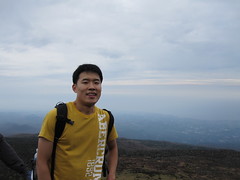
Lee Farrand (이소하): A 28 year old Korean Australian, adopted to Australian parents at the age of 2. Returned to Korea in 2006 and is currently a PhD student at Seoul National University, studying ovarian cancer. Tried briefly, but was unable to locate birth parents.

-------------------------------------------------------------------------------------------------
Lee: I had intended to see Resilience for quite a while, mainly due to the increasing amount of times it popped up in the adoptee online community. But a busy schedule and a general deprioritising of all things adoption-related for the time being, led to me listing it as a non-urgent matter on my mental list of things to do. Then a couple of weeks ago, Nanoomi, an English K-blogging initiative, mentioned it on it's discussion boards. Before long, I had found myself cyber pinky-swearing to do something that in retrospect I'd rather have let someone else do. Reviewing movies is always fun, but when the topic is adoption, I find myself having difficulties expressing my thoughts with clarity.

IMG_3021

And then up flew a poster in our Biomodulation department elevators at university. I took this as a sign to get my act together and go see the film while it was still playing. While I normally enjoy an insulated life on campus, it seemed that Resilience was creating waves from somewhere north of the Han River, and tiny ripples were lapping at my shores.


How does an adoptee put in words, the work of another adoptee that focuses on the topic of adoption? Describing the film in aesthetic or technical terms would, for me, seem to be side-stepping the core issues. These issues are specifically relevant for anyone affected by adoption, but perhaps just a passing curiousity for those who have not.
My initial reaction to Resilience was a mixture of feelings. I felt a little inspired, a little helpless and a little angry. 
The documentary follows the lives of mother Myunja Noh and her son Brent Beesley, separated soon after Brent's birth due to family problems. Brent's Korean father gambled the family's savings away, and ended up leaving. Myungja's family put Brent up for adoption without her consent, and she returned to pick him up one day, only to find that he had been sent away and and her relatives refused to tell her where her baby was. Brent ended up being adopted through an agency, to a family in a small country town in South Dakota.


Brent returns to Korea alone, with two daughters back home, looking for his birth parents, partially out of curiousity and partially for the family's medical history. He and Myungja meet for the first time on a Korean TV show that specialises in reuniting family members. For many adoptees, going on national TV is their last ditch effort in trying to locate their birth parents, when all other options have proven unhelpful. While the utility of this particular show has been remarkably successful, many adoptees including myself would only consider appearing on it after an excruciating amount of consideration. After all, who wants their first meeting with their birth parents to be hijacked by the spectacle of a Korean television show? It's like giving someone's eulogy while dressed up as a clown. 
Before meeting his mother, who is kept behind a curtain, Brent is asked by the show's host to write on a piece of paper whether he 'forgives' her or not. Asking a son to forgive a mother he has never met, for circumstances he has yet to even learn about, is a little ridiculous. After all, no sane person would go to all that effort to appear on public TV for the sole purpose of shaming their birth mother. I guess the TV show executives need to make money, but perhaps the subject matter could be treated with a little more graciousness.


The documentary then focuses on what happens after reunion, which is often a complicated chapter in the lives of both parties. Resilience maintains a fairly neutral perspective, and both Brent and Myungja's natural behaviour and openness about their feelings provide a firm foundation for the film's substance.
Brent talks about his upbringing in a white American family but as a racial minority, a common experience for many transnational adoptees. As an idea lingering in the background during childhood, his reflections describe adoption as being neither a distinctly positive or negative experience, but that he had a good life nonetheless. After meeting with his overwhelmed mother, he is abruptly forced to react and respond to a surreal change in his life's events. These include being smothered with attention and being almost forcibly assimilated into Korean family life. This occurs at an accelerated pace, as if to be making up for lost time. Myungja works in a restaurant and does not have a lot of money, but most determinedly decides to buy gifts for Brent and his family members. These include expensive Korean hanbok, that Brent neither needs or wants, but accepts on occasion for the sole purpose of letting his birth mother know that her expressions of affection are appreciated.

Myungja comes across as a warm hearted and sensible Korean mother, plagued with a seemingly incurable amount of guilt that drives her daily life. She describes her difficulties in expressing her true feelings to Brent without a translator, and her eagerness to build a strong relationship with him. In some ways it seems as if she is a little frustrated that Brent does not behave in a typically Korean way, but this is always swamped and overridden by her inner determination to compensate for time that has been lost.

The documentary itself combines an interesting mix of elements. Filmed over the space of four years, with Brent traveling back and forth between the US and Korea, it uses passive recording of family gatherings, interviews with family members and even self-recorded video blogging to communicate the complex balance of feelings on both sides of the Pacific.

As an adoptee myself, who has been living in Korea for some time now, I felt intricately connected with the unfolding story. Brent's description of his upbringing, from the Bruce Lee references by the kids in his neighbourhood to his family photos surrounded by a white family are highly familiar to both myself and many others. Similarly, upon his return to Korea, the culture shock of the Korean way of life is also something I can strongly relate to. Brent describes Korean families as being 'tribal,' something I find to be both a positive and negative aspect of life in Korea. Western families tend to have more physical and emotional distance between individual members, something that comes with a higher amount of personal freedom. Brent is strongly encouraged to learn Korean (his mother reads him the alphabet), and become 'more Korean.' This is a common theme arising after family reunions, which is an extensive cause of frustration on both sides.

Adoptees who have grown up overseas often have trouble integrating into Korean society, which is not a result of personal desire alone, but because of the irreversible formation of an identity in another country. As such, we often find ourselves having to defend our individual tendencies. This ranges from why we don't study Korean 'with more passion', to why we don't think that age alone is an appropriate reason to respect someone. As a Korean adoptee, I feel neither completely Australian nor completely Korean. I don't like speaking in Korean, and I don't like eating ddeok. Nor am I particularly interested in Korean history. But at times I do appreciate the accelerated closeness of Korean friendships and I admire the fierce aspirations of the Korean people. And I also feel genuinely happy when Korea does well in the World Cup. But the same is true when Australia does well. Being tied to both of our mother countries is an integral part of who we are, and the amount to which we feel closer to one or the other should be left for us alone to decide.


Seeing Resilience, I find it difficult to not talk about my situation, and express some of my own thoughts on Korean adoption. When it comes to the idea of adoption, I don't think anybody has the answers, nor can anybody accurately represent the opinions of all parties involved. For myself, I do have some opinions on how things could be more fair and more logical. Much of this has to do with aspects of Korean society and social norms that are followed here without reasonable analysis or discussion.

Many advocates have long been convinced that a large part of the remedy would be the evolution of women's rights in Korea. This includes everything from healthy public debate about a woman's right to make a conscious choice about maternity, to workplace discrimination and pay differences according to gender (Korea ranks unfortunately lowest in the OECD).
The lack of women in CEO and management positions in Korea is representative of a wider social disparity. The actual ratio for male to female professors at SNU is likely to be abysmal - after 2 years at the university, I've still never met a single female professor in person. Incoming professors in our department are voted in by a special board, made up entirely of older males. There could also be more support for single mothers, including an expansion of maternity leave, and anti-discrimination laws regarding employment. Without massive support from friends and family, and an inadequate system of welfare, a single mother in Korea has little chance of living a successful life. For all its progress in leaps and bounds, Korea still has strong social forces of conservatism that are holding it back.

Filial piety (효), a term barely recognisable in the Western world, refers to the Confucian belief that respect for one's elders and ancestors is a virtue to be held above all else. While questionably reasonable (if one has respectable elders), in Korean family life it is heavily enforced as a necessary path to a virtuous life. In a simple world, such a virtue may seem worthwhile, but in modern Korean society its side-effects include the abuse of power, unfair discrimination and the sidelining of logical debate.

Filial piety encourages the surrender of individual will to a collective conservatism and an unquestioning defense of the status quo. This quenching of respect for the rights of the individual in Korea, for what is disguised as the collective good, often allows elder family members to make extremely important decisions without consulting those who would be most affected by them.  In Resilience, Myungja talks with clear bitterness about how her family members sent her son away while she was looking for work, and refused to tell her what had happened. The decision for the family members must not have been an easy one, and we can conclude that it may have been in everyone's best interests. However, Myungja's acceptance of the unfair, even after all these years, may seem quite unsettling to an outside observer. The drive to endure and persevere 'diligently' in the face of injustice is deeply rooted in the Korean psyche.

People who openly criticise these aspects of Korean society, soon find themselves at odds with blind patriotism and a strong defense of things unreasonably defined as a part of the Korean identity. This is a reaction not unique to Korea, but common in all societies that have an underdeveloped realm of public debate. Korea has come a long way in these past few decades, and a helpful next step may be to grow up from its patriotic origins and focus on facing ethical issues with logical maturity.

After seeing Resilience, it's got me thinking again about my own birth parents. A birth search costs not only time and money, it's psychologically draining and the emotional risks are extremely high. I've been married to a wonderful Korean wife for over a year now and we live in the international dormitories at SNU. My wife is now 10 weeks pregnant, and after she gives birth, we'll be living off my scholarship and my part-time tutoring job. Life is busy and not always easy, but we are both happy. But I realise that right now, before we have our child, is the best time to start looking again. In some ways I dislike feeling rushed to do something that I'm not sure I'm ready for.

In conclusion, Resilience is an impressive piece of work, and its distinct elements make it uniquely recognisable as directed by someone who has an inseparable relationship with, and passion for, the subject matter.

While it doesn't end with any concrete conclusions, it's likely to arouse ripples of thought and discussion among both adoptees and Korean citizens alike, which will hopefully become a catalyst for fair and logical future changes. 
______________________________________________________________
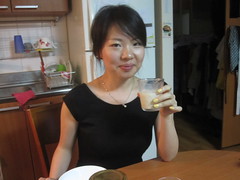
Heather Jung (정가희): Lee's wife, a 30 year old Korean native from Busan. They have been married for over a year. Currently employed at an English language school in Seoul
-------------------------------------------------------------------------------------------------
Heather: I had earlier watched the movie 'Susan Brinks Arirang' in 1991, which describes the life of an adoptee girl, Susan, who had a tough life since she was adopted to Sweden when she was 3 years old. The movie ends with a scene showing Susan meeting her biological parents. It seemed that the Korean audience was moved by such a dramatic story.    
Resilience on the other hand, has a very steady mood until the end of the movie. The movie poster has the most dramatic scene, which has an old photo of a kid, saying I recognized him at first sight.
The movie begins with the reuniting of an adoptee and his mother, which was how Susan Brinks Arirang ended. It was interesting because it didnt completely look like someone elses story, and somehow related to me, because I had heard many stories about adoption and adoptees from my husband. I can only guess how they feel upset when they realized their lives were twisted from the beginning.   
Resilience seems like it is striving to describe the reality of reunion. I liked the scenes showing two people living their normal lives in different places. Noh Myungja is a middle-aged woman, the type you can see everywhere in Korea. Brent, living in a small town in America, is also a normal guy who has 2 daughters. These scenes make me imagine how my husbands biological mother would look like if we ever found her.   
My husband and I agreed that the case in the movie is one of the better-ending stories which may not always happen. However, it is still mixed up with small conflicts between a mother who was missing her son for 30 years and a son who has grown up in a totally different environment, not knowing anything about his biological family. People tend to think that if adoptees find their family, they can fill up the last piece of the puzzle for their lives. But they may feel even more dejected when they discover unexpected gaps between them. 
Both Susan and Brent reunited eventually, but it will take a long time to fill the gap between them and their family members. Because of that, adoption and reunion can be a more difficult story than we first expect.  
______________________________________________________________
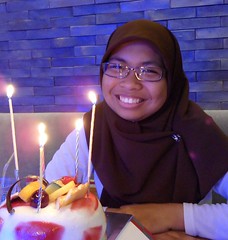
Sriyulianti Widhiarini: An international student of aerospace engineering studying at Konkuk University from Bandung, Indonesia. Has a strong interest in the independent music scene in Korea.


 -------------------------------------------------------------------------------------------------

 Widhi: It was not the adoption theme that brought me to watch the movie, but I was actually interested to watch the movie because of the band Dear Cloud’s song ‘그럴수만 있다면', that was featured in it. The trailer seemed to be very promising and the music fits very well in it, so I decided to give it a go without any hesitation. It was a very nice opportunity that I got to see it with Lee and his wife Heather. 


It was very interesting to see how a 4-year story was put together in a merely 95 minute movie. The story itself was very interesting and the stories were smoothly delivered scene by scene. The background music was also put at the right scene without making it too dramatic or bland at the same time. It was a little bit emotional for me after the first half of the movie. However, it did not last long since the movie moved very fast and I no longer could hold that particular emotion for a long time.
Adoption has never been a very familiar thing for me. By watching this movie, I see an example of how it is not always about ‘living happy ever after’. There is always a void in the heart of an adoptee when he realizes about his true identity, especially when it comes to international adoption. There is always a question of ‘why’ and the eagerness to find the answer. It might have also been painful for those who later realize about the true reason of why they were adopted. This movie may serve as an example of a happy story, yet I thought of the opposite at the same time. It was merely being emphatic yet I really could not go deeper than that.
Somehow I felt that the movie itself showed merely a balance of happy and sad, while other emotions like anger, confused, curious were rather less apparent. Yet, since a lot of scenes involved talk or conversation, the instrumental music fit very well with each scene and I could feel a glimpse of longing. It was not until the end of the movie that I finally heard the song from Dear Cloud. For me, it closed the movie quite well. I was kind of hoping that the song would come out a little earlier in the movie but I realized that it would have somehow mixed up the story within the scenes.


The title of the song itself ‘그럴수만 있다면’ means ‘If I Could’ and may perfectly portray the desire of the two main characters to know more about their past. It’s related to the movie and does not look back merely at the past but also tries to give more focus on what is coming in the present and future. What becomes the last word of the song ‘끝나지 않는 ’, means the story has yet to finish but it is also an unfinished dream, especially for both of the main characters.
-------------------------------------------------------------------------------------------------


Resilience is now showing in selected Korean cinemas. For more information, please refer to these links:
http://www.resiliencefilm.com/
http://www.koroot.org/
http://www.goal.or.kr/

Friday, September 10, 2010

IKAA Gathering 2010, Part 2

After the opening ceremony and associated pleasantries, the IKAA Gathering gained altitude and seamlessly switched to supercruise mode, which consisted of a meticulously pre-organised program of events. I was unable to attend for most of the week because I had cell cultures to attend to, but I made it out for the adoptee literature session.

IMG_2722
Here's our old friend, SK Chae, giving a prepared speech about his book, Remembering Koryo. For a man who is more well-known for eating dinner using only a knife rather than for his penmanship, he summed up the purpose of his book with surprising clarity.

IMG_2731
The warm summer nights of the gathering were mostly spent drinking beer. In the photo above are some well-known faces in the KAD community.

IMG_2732
In this photo there are two Danes, a Frenchman, an Australian and an American. Can you tell who's who?

It's all about the hair.

IMG_2735
And in this photo, every single customer is a Korean adoptee. We reserved a local bar for the night and filled it with raucous chatter from a smorgasbord of languages.

IMG_2738
Fun was had, and tall tales told, respectively.

IMG_2740
The sessions during the week that I attended were mostly helpful workshops, in which I feigned sobriety.

IMG_2759
For this gathering and the last one, there was a mini adoptee World Cup tournament held, with the various organisations putting together teams. This year, the Danish team were victorious. Upon going with them to celebrate, I learned that Danes enjoy drinking and singing/chanting Danish victory choruses. We Australians celebrate victory in a similar manner, but without the singing and chanting.

The night started off slowly because nobody knew of a bar in the Myeong-dong area that would accommodate thirty adoptees in a celebratory mood. After forty minutes of walking through unrelenting torrential precipitation, we decided to seek shelter next to an inadequately-verandahed department store. Half an hour later, utterly drenched, but spirits undampened, we found a bar with enough space. If we were in Spain, I would have quipped "the rain in Spain falls mainly on the Danes. "

But we were in Seoul.

IMG_2761
Samsung have supported IKAA considerably over the past, and this year was no different. They usually pay for the final dinner, which is a flashy set course menu with free-flowing wine.

IMG_2765
IMG_2767
Just like last time, we were treated to professional performances with Ahn Jung-hyun as MC, the lady who used to host the Arirang talk show Heart to Heart.

IMG_2768
More than 500 Korean adoptees from across the world converged in formal dress attire.

IMG_2770
Here's Liselotte Haejin Birkmose, whose ice-sculpture-melting daughter we saw in the previous post. I've only said hello to her once or twice, but she seems very friendly and nice.

IMG_2774
IMG_2773
The menu was enjoyable, although I had no idea what Bearnaise sauce was. Tasted good on Aussie steak though. Back home, we'd just slap that kind of meat on the barbie and eat it with tomart'oh sawce.

IMG_2782
And there was some good old Korean drumming to bring out the warrior in all of us. When I hear Korean wooden drums, I guess I should be reflecting on the vibrance of Korean traditional music, but all I ever think about are orcs.

IMG_2785
Facing to the right in this photo are Daniel Moore and Sarah Kim Randolph. Sarah used to blog well, but I think she got busy. Maybe Daniel has something to do with that. He also reads this blog, apparently, and told me he likes my 'one-liners'.

Possibly like this one.

IMG_2787
And here's me and Tae-Yang, a Dane and a good friend. Tae-Yang comes back to Korea almost every year and it's always the same beautiful story. 

Hug. Talk. Eat. Drink. Laugh. Drink. Hangover.

IMG_2790
Adoptees in Korea are funny. We set up a drinking station outside Family Mart and spent the hot summer night getting better acquainted with Cass, soju and makkeoli. There were a few Korean passers-by who gave us second glances due to our sprawled roadside gathering, and we simply returned those glances with a friendly air of aloofness.
If we were in Japan or China however, we probably wouldn't feel as entitled to 'make ourselves at home' in public.

IMG_2792
It wasn't long before the cheap alcohol began weaving its confusing magic, and we soon felt like eating ice-cream. That's another reason why Family Marts are good places to drink. In the photo above is Jes Eriksen, a Dane whose first name is pronounced 'Yes'.

The old rule of thumb is that an adoptee gathering is a good one 'if it ends with some guy called Jes enjoying an ice-cream by the side of the road. ' 

And by that standard alone, I'd say that the 2010 IKAA Gathering was a successful one.

Tuesday, September 07, 2010

IKAA Gathering 2010, Part 1

IKAA is a collaborative umbrella for Korean adoptee organisations around the world. Every three years since 2004, gatherings have been held in Korea to bring everyone together under one roof. This year, that one roof was the Lotte Hotel Seoul, a nice venue with a lot of chandeliers.

IMG_2742
The organisations that form IKAA are all run by Korean adoptees, rather than adoptive parents or adoption-related agencies. Amongst the adoptee community, there's a broad spectrum of views on transcultural adoption, with some vehemently opposed to it, and others who think that it's the best solution to an unfortunate social problem. Korea has some strong cultural elements that put pressure on single mothers to relinquish their babies, while various social taboos here discourage domestic adoption. Although I wouldn't say that I regret being adopted, I do wish that the issues involved were more openly discussed in Korea. And I think acknowledgment is well overdue for those who are doing something about it.

IMG_2696
The last time I saw a bunch of adoptees in a hotel lobby was three years ago, at the 2007 Gathering. It brought back distant memories of my bemusement while walking through a group of Korean-looking people speaking fluent Norwegian, Dutch and Swedish, and feeling like a foreigner amongst them.

IMG_2700
The whole gathering was put together with the sweat of hard-working volunteers from across the world. At SRTM, we had to send about seventy emails back and forth, just to organise a wine party for one night. 

My estimate for the number of emails that were needed to organise the 2010 IKAA Gathering is between 6,000 and 8,000.

IMG_2704
We occupied a few floors of the Lotte Hotel for various meet-and-greets, as well as symposiums and workshops. I was on a panel for advice about working in Korea, which seemed to go fairly well. The summary of what I had to say was along the lines of 'proceed with caution.'

This country is a nice place to live for a variety of reasons, but like any place with a lot of Koreans, it can occasionally drive you nuts.

IMG_2711
At the first meet-and-greet, I saw a few familiar faces from some of my earlier adventures in the motherland. Most of those adventures involved fruit-flavoured soju cocktails.

IMG_2709
The food at IKAA gatherings is always amongst the best that a cash-starved Korean adoptee graduate student can hope to consume. If I wasn't an adoptee, I'd pretend to be one just so that I could eat the food.

IMG_2713
On that podium is Tim Holm, the president of IKAA and a man who can make the logistical mess of a gathering on such a grand scale coagulate pleasantly. The feat could be likened to gathering billions of tangled computer power cords and combining them all to form the perfect image of a daffodil.

IMG_2747
IMG_2748
The opening ceremony went off without a hitch. You can spot adoptees in the audience who are first-timers to Korea, because they watch the samul-nori performances with wide eyes, open mouths and an excessive use of digital cameras. 
And you can spot the old-timers because they're the ones scanning the audience looking for the first-timers.

IMG_2749
I've optimised by buffet strategy over many years of buffeting. On a side note, I think the letter 't' is pronounced in the word 'buffeting'. What do you think? Anyway, my buffet strategy involves the following guidelines:

1) Avoid rice, bread and anything that looks like it has flour. Break this rule if every other option looks terrible.
2) Use lettuce sparsely, as it is very demanding on plate real-estate. Lettuce leaves can be placed on top of other items, to make it look like you've made healthy choices.
3) Arrange any items with sauce or gravy on your plate so that they are separated from each other, with no possibility of cross-saucing. Explain to your new table friends about your accomplishment.

IMG_2751
Here's an ice sculpture that was made for the occasion.

IMG_2757
And in the picture above is Liselotte's impossibly cute little daughter, who enjoyed melting what she could of the sculpture, using the heat of tiny palms.
I was tempted to explain to her about the thermodynamics at play when she puts a palm on ice, but I had a feeling that it would have been a waste of time. Especially seeing as she can only understand Danish.

Part 2 coming soon!

Wednesday, September 01, 2010

Eric's Book Launch

Unless you're an author and all of your friends are authors too, it's not often that someone you know writes a book. Eric the Pirate wrote a book recently called Remembering Koryo. If you haven't bought it yet, then you should buy it, and if you're in Korea, you can buy it at Kyobo bookstores.

IMG_2676
To help get the word out, Eric held a launch party at Koroot recently and invited various people from the Korean adoptee community to come along. Eric (SK Chae) is a French Korean adoptee with an interesting history.

IMG_2669
Performers and artists displayed their wares, beginning with this Danish lady who sang a song that she composed herself about finding her mother. If it was a poor performance, I'd just say here that it was pretty good. But actually it was an excellent performance.

IMG_2673
This fashion designer had created her own hanbok designs using hand-dyed material.

IMG_2677
And here's Jennifer Kwon Dobbs, a professor, poet and author who knows a lot about literature. My dabblings in literature involve writing this blog, reading Wikipedia and trying to understand science manuscripts. But when I grow up, it is my intention to read fiction again.

IMG_2680
Oh and this guy was great. He composed his own music with vocals that reverberated pleasantly off the walls of our basement room.

IMG_2681
On the walls of Koroot is a photo of Maria, a fellow Koroot inhabitant and a good friend. She's a medical student in Denmark now and we're both going to become doctors in a few years time. But she's going to be a real doctor.

IMG_2688
We ended the night with a barbecue hosted by Koroot and some superficial chatter, before heading off for the second round. After settling down in Seoul with Heather, I haven't been involved much with the adoptee community here. It's always nice to see old faces again and it gets me thinking about doing a birth family search again. 

But, first things first. I have cell count data to analyse, and this blog post has admirably fulfilled my requirements for ritual procrastination.

Monday, August 02, 2010

Remembering Koryo

Remembering Koryo is a fascinating book written by S.K. Chae, a Korean French adoptee.

IMG_2694
The story of Korean adoption is highly complex and prone to being misunderstood. While I don't claim to know the whole truth behind the scenes, I do know some things from my own experiences and have heard a lot more from interacting with others in the Korean adoptee community. Making claims for or against adoption is futile unless one first understands that each case is unique and that there are a multitude of societal forces at play.

Remembering Koryo follows the lives of a few Korean adoptees returning to Korea for various reasons. The stories are unique and colourful, easily understood by an adoptee like myself, but perhaps more unfamiliar to the average reader. To appreciate Remembering Koryo in a realistic context, one first needs to know a little more about Korean adoption in general.

I really don't think about adoption as much as I perhaps should, and purposely keep it at the back of my mind to avoid addressing too many of the complex realities of the issue. 
While the Korean war produced the first generation of orphans, what has happened since that time cannot be completely related to dead or missing parents. It's entirely plausible that many of the 148,394* adoptees sent overseas between 1953-2001 had parents who couldn't afford to feed or educate their children.  
*(Korean government statistic, although likely to be considerably more)

However, the reality is that the number of 'orphans' sent overseas continued in the thousands each year throughout the 80s and 90s, and still continues today, in 2010, despite South Korea's exponential economic growth since the 1960s and its transformation into the world's 15th largest economy with high standards of living. When one considers the fact that Egypt has a population of 79 million, but South Korea is 4 times wealthier, it seems unusual that between 1971 and 2001 less than 2,000 children were adopted from the entire African continent to American citizens, compared to tens of thousands from Korea alone.

A direct result of the thousands of adoptions occurring throughout the late 70s and 80s is that hundreds of Korean adoptees are returning to modern Korea for various reasons. Activist organisations such as GOA'L and IKAA have sprung up to assist fellow adoptees who return to their country of birth in search of answers. Favourable or not, this recent influx of inquiry has started to expose some of the inner workings of the adoption system.

One of the more contentious issues is that the charitable origins of the main adoption agencies appear to have transformed into privately owned for-profit operations. Contrary to what many people reasonably assume, virtually all adoptions of Korean children are managed and profited from by privately owned businesses that charge thousands of US dollars to prospective parents in western countries. These proceeds are used to profit the companies (invariably titled as Welfare Societies or Services), as well as pay off midwives, obstetricians, 'counselors' and the Korean government, providing an attractive solution to the 'orphan' problem. Around US$15-20 million per year is made through Korean adoption, which is significant compared to the amount spent on public welfare, and the burden that would be incurred from providing for thousands of babies in foster programs. 

Three of the four major adoption agencies run their own pregnant women's homes, with bedside 'advisors' for mothers who may be considering giving their child up for adoption. One runs its own maternity hospital, and all four support or run their own orphanages. All four pay foster mothers about $80 a month to care for the infants, and the agencies can provide all food, clothing and other supplies free of charge. The agreement is that the agencies will cover the costs of delivery and medical care for any woman who gives up her baby for adoption. They also pay a lump sum of cash to the relinquishing mother. This system not only makes it easier for single mothers to give their children up, it actively encourages them. In the 90s, a Korean baby could cost a western couple around US$5,000 depending on the agency, but in 2010, the prices can be as high as US$40,000. These prices are labeled as 'administration and medical fees' and despite the considerable costs, the overseas demand for young healthy Korean babies has always outpaced supply.

As well as the 'pull' from these market forces, there are also significant pushing forces for single mothers to give their babies up.

Korea is not only a conservative patriarchal society, it also follows rigid aged-based hierarchies. A grandmother may have more influence over a newly born child's fate than the mother herself. Single unwed mothers experience high levels of stigma not just from the general public but especially from within their own family. Society here stigmatizes unwed mothers to such an extent that Koreans often describe things as outrageous by comparing them to "an unwed woman seeking an excuse to give birth." To rational people, this may seem ridiculous, but many outsiders are unaware of the deeply ingrained idea of a shame society.

Korean culture places an unusually strong emphasis on unwavering respect for elders, paternal bloodline and family ties. The tragedy of the Korean single mother is that she will often be forced to give up a baby born inconveniently due to threats of being ostracized as well as financial isolation from family members. Some families have completely cut off ties with their daughters who have given birth, even going so far as to change their phone numbers. In addition, job seeking can be exceedingly difficult, with many employers accusing unwed mothers of being dishonest. Babies born through extra-marital affairs will often be covered-up or ignored by biological fathers, leaving the mother to deal with the responsibility. Gender discrimination and income disparities between men and women in Korea make this an even more difficult task. In Korea, about 70 percent of unwed mothers who give birth are believed to relinquish their babies for adoption, according to a government-financed survey. In the United States, the figure is 1 percent, according to the Health and Human Services Department.
In Chae's book, a decision is made for a single mother by her family while on the hospital bed, and she has little influence in the matter. Young females in particular hold low ranks in traditional Korean family hierarchies. Money is exchanged and her baby is taken away by an agent. While this situation may be the exception rather than the rule, Remembering Koryo represents the idea that these unjust exceptions are occurring, and perhaps more frequently than the general public would like to think.
Of course there are the good stories of adoption too. Impoverished parents in Korea have sent, and still send children that they can't afford to care for overseas. Many of these children grow up to lead happy and fulfilling lives in their adoptive countries.

However, a point that Chae makes is that this is a lottery over which the adoptive child has no control. Adoptees like myself, from Australia or America find it extremely easy to live stable lives here. We can speak English fluently and are therefore considered 'superior' to French and Scandinavian adoptees when it comes to English teaching, the main source of income for nearly all adoptees. European adoptees on average seem to have a tougher time both here and in their adoptive countries, which were historically less multiculturally diverse than the US and Australia. A Danish adoptee recently pointed out that there was no Danish language equivalent for the term 'Korean American' or 'Korean Danish.' In Denmark, the only word that exists is 'adopted.'

Another point that many adoptees want to make, including myself, is that while being sent overseas may be better than growing up in an orphanage, we are becoming increasingly wary of the sums of money involved and the stigma in Korean society driving single mothers to give their babies up. While we can justify adoption in terms of 'better off for the child', it doesn't always boil down so simply. One of the hardest things to explain to the general public is that many adoptees don't see themselves as 'lucky'. We were thrust into a destiny presumably in our best interests, but because none of our own opinions were taken into account, it therefore seems false to have to feel grateful for it. And when some adoptees seem to get dealt a more unfair hand in life, it makes us feel the need to examine all sides of the situation.

In Sweden, Korean and other international adoptees are highly overrepresented when it comes to suicide, suicide attempts, mental illness, substance abuse, social maladjustment, crime and other social and personal issues. Swedish adoptees are three times more likely to become drug addicts than biological children.

Some adoptive parents expect their child to fulfill the role of the child that they were unable to have. This puts unreasonable expectations on the child. One French adoptee in the book was adopted from a young age by a French couple, but then sent back to Korea after 7 years, because he was 'too emotionally distant' for them to handle. He was then adopted by another French couple, as if he were simply an item returned for re-sale.

One prominent Norwegian adoptee (not in the book) returned to Korea and eventually found out that her grandmother had kidnapped her as an infant and sold her to an agency, pocketing the cash. The parents thought that their baby had been lost. She has since re-established bonds with her biological family.

There are also exceptional cases of sexual abuse by adoptive parents and siblings, and one Korean girl was even murdered by her mentally unstable adoptive mother. How can an adoption agency  based in Korea comprehensively assess thousands of overseas adoptive parents per year?

It would be ridiculous to assert that these cases are common, and we cannot ignore all the thousands of adoptive parents and families who sacrifice so much to rear their adoptive children unconditionally loved. As stated earlier, adoption is a complex issue that cannot be easily understood in its entirety. Remembering Koryo brings some of the more uncomfortable realities of the issue into the limelight, voiced by those who have not experienced what a theoretically good system intended. Chae looks more at the Korean side of the story for answers.

Some Korean mothers have contacted adoptee organisations and said that they were heavily coerced or even tricked into giving their babies up. One said that the agency told her that they would look after her baby until she had gotten her financial situation together. She signed a form giving caretaker status to the agency and came back in a month to find that her baby had been sent away. She went to the police but they said it was out of their hands. Adoption agencies here are said to have the active cooperation of the police and hospitals.

These ideas are only indirectly addressed in Remembering Koryo, which focuses on the personal stories of a few European adoptees returning to Korea a few years ago. Chae's book also touches on the transformation of cultures worldwide, by what he calls the 'dominance of one country over another.' He also points out some interesting observations on the gradual and voluntary dissipation of Korean cultural identity, from the overuse  of western models to sell products, to the absurdity of Latin mottos on Korean university seals to convey a sense of prestige.

He draws a connection between this and the fact that many Koreans see western culture as superior, facilitating the ease at which society sends Korean babies to white families without reasonable concerns. If a single Korean baby were to be adopted by a well-off black African or Arab family, there would surely be a public outcry.

Then there's the issue of adoptees' rights to their own records. These records are held in paperback format by adoption agencies, and contain information on the individual circumstances surrounding each adoption. One person in Remembering Koryo visits a major adoption agency to request to see his birth records on multiple occasions. The staff treat him dismissively (as they did with me, when I went), and let him see the front page of his file, but not the 'red folder' that accompanied it. When he inquired as to why he couldn't see the red file, the agency worker told him that it contains private information and that he can't see it. After a period of frustration he returns to the agency and requests to see his file again, eventually grabbing the red folder out of the hands of the worker and running out the door, chased by the agency workers. He escapes and translates the file, exposing the true circumstances surrounding his adoption and tracking down the remnants of his biological family. The story continues, but I won't spoil it here.

The main point in all this is that because the agencies are private businesses, rather than public services, they maintain complete control over their records. Banning adoptees access to their own records denies them the ability to confirm the true situation surrounding their adoptions, something that would possibly reveal a lot of 'discrepancies.' While we can see that the agencies feel obliged to protect the secrets of the parents (which is good for business), adoptees are people with a right to know the circumstances of their relinquishment. Being treated as inconvenient problems to be solved and forgotten about frustrates many of us who only wish to know the truth of our histories.

Overall, Remembering Koryo is a highly insightful book for both adoptees and those who wish to learn more about the complex issues at play. Chae chose to communicate his accounts with pseudonyms, using sometimes simple and incorrect grammar, conveying the author's difficulties in describing complex emotional situations behind a language barrier. While the book doesn't offer any solutions (many of us realise that not every problem has an ideal solution), it's a touching and powerful reminder of why we need to think carefully about the unjust elements of any system that affects the lives of the vulnerable.

The book is currently available on sale at major retailers in South Korea, but will be selling on Amazon in a couple of weeks. A Korean translated version will be released in December.

As a side note, one charity called the Korean Unwed Mothers' Support Network has been formed. Interestingly, it was founded by a foreigner concerned for the plight of single women in Korea, rather than a Korean citizen.

For further reading, I recommend this New York Times article.