Friday, August 13, 2010

Yeoksam Art Nouveau City Sky Lounge

The only thing better than a potluck party, in married life, is a wine party. Although both can feature wine, a potluck requires the preparation of food, something that invariably requires the input of effort. And every closet alcoholic knows that food is just an awkward icebreaker for suggesting wine consumption, something that a wine party circumvents with a conveniently thoughtful title.
You know, I never used the term 'potluck' before I came to Korea. It probably snuck into my vocabulary via frequent interaction with North Americans. What did we call it in Australia?

Probably something like a 'bring-your-own-food party'?

IMG_2495
Every year SRTM holds a summer wine party to facilitate comical interaction between members and guests. This year, Robert, Hyun-Gee, Johnny, Annette and I were on the organizing committee. And any wine party committee with a proper sense of responsibility will sample the wines on offer before summoning the tribe.

IMG_2497
We chose the Yeoksam Art Nouveau City Sky Lounge as the venue. It's between Yeoksam and Seolleung subway stations, directly opposite the Renaissance Hotel.

IMG_2509
This place is good. They have a nice cold food buffet and unlimited wine for 3 hours from 7:00 until 10:00pm every weeknight. The interior design is 20th century Victorian, I believe, apart from the blue neon lighting, which is classic Korean Star Trek decor.

Uncultured are those not of the opinion that everything goes well with neon.

IMG_2505
My liver and I have experienced a few unlimited wine buffets in our time. If you pay less than an unreasonable amount of money, you'll often be confronted with the finest selection of $10 wines that cannot otherwise be sold. But at Art Nouveau, the wines were surprisingly good. There were Spanish, Australian, Chilean and South African wines to choose from, and all of them were enjoyably imbibable.

IMG_2515
The food on offer was well balanced and without shortcuts. Despite being pretty far from my place, I'm planning to come back here sometime soon.

The wine and food buffet at the City Sky Lounge is only available on weeknights and is W27,000.

IMG_2518
We discovered through our post-wine adventurousness, that they also have a rooftop garden.

IMG_2523
Robert was particularly taken by the various anthropomorphic statues on display.

IMG_2529
Inspired by Robert, and also due to the inifinite possibilities arising from unlimited wine, we transformed ourselves into talented mimes. Someone had hung some white ajossi gloves out to dry, and we made good use of them for our show.

Our research having been done for the night, we went home after the second round.

IMG_2324
This is what our new lab looked like a couple of months ago.

IMG_2663
And here's Dr Vahlberg in the lab more recently. We're still waiting on various equipment to arrive, but have been able to set up some simple experiments to confirm that our cells survived the trip from Ottawa. My guess is that we'll be in full swing towards the end of September.

IMG_2222
This is a photo I found from my old work in the Plant Bacteriology lab. These were my rice plants in the Suwon greenhouse, on the final day that I worked there. I tipped them over to drain the water from them. Plant biology is interesting, but it's not as exciting as cancer research.

I'll tell you all about it once we get our biohazard hood, CO2 incubators and fluorescence microscope up and running.

IMG_2543
Mr Pizza is a franchise restaurant chain in Korea. The pizzas are edible, but they get my vote for the worst spaghetti in Korea. If I were a ranting blogger, I'd go on about it. 

But we'll just leave it at the popular Konglish description of not-delicious.

IMG_2244
In Korea they make starch toothpicks from potatoes. They're strong, but dissolve slowly in your mouth. Good for biodegradability and forest conservation. I'm surprised they haven't been successful outside of Korea.

Any readers out there who are in the import/export business? There's a starchy goldmine of an idea right here.

IMG_2430
Every once in a while, students in the BK International House have a sort of garage-less garage sale. It's often a good way to pick up exotic ingredients from the SE Asian students. A while ago, I picked up some green curry paste from a Thai student and made it into this curry. I'm more of a red-curry kinda guy, but this one wasn't too bad.

IMG_2575
And here's a steamed mackerel that I hammered out of an old coral trout recipe. It's Hong's dad's old trick. You steam the fish, then add ginger, soy and spring onion. Then you get some oil in a pan on high heat and drizzle it over the toppings to fry it lightly. Fairly simple, but works wonders.

Mmm, now I'm hungry again.

Monday, August 09, 2010

Wiki Rummage #5: Biological Dispersal

Biological dispersal refers to a species movement away from an existing population or the parent organism.  For example, if an apple tree sprouted a sapling, the biological dispersal of the sapling would be how far away it is from the parent tree. Your individual dispersal range would be the distances you have traveled from your birth place.

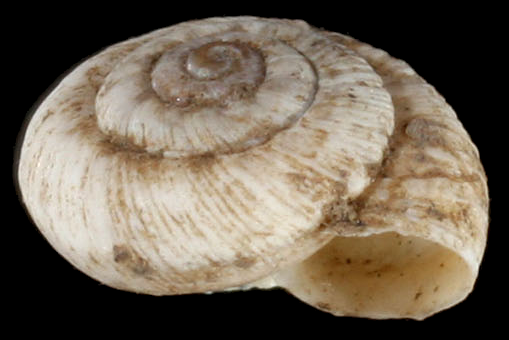
Xerocrassa geyeri is a species of land snail in central Europe with a biological dispersal capacity of about 3 metres during its entire lifetime. High dispersal capacities simply represent the ability that a species has to colonize distant lands. For humans in a post-colonial and globalising world, this becomes less of an issue.

Most plants have a limited dispersal capacity because they are unable to move. A lot of them get around this by using the wind, water or animals to spread seeds to new territories. Banana trees advertise their fruit with colours and reward animals who eat them at the right time with a pleasant flavour representing energy in the form of carbohydrates. The banana seeds pass through a monkey undamaged, and come out the other end preferably a measurable distance away from the parent tree. Not only that, but the young seeds are deposited in their favourite food, monkey poo. So in effect, monkeys are seen by plants as a handy means to get their offspring from A to B. But of course, smarter monkeys have learned to circumvent the system with agriculture and sewerage systems.

Another interesting concept that arises from this is the idea of stationery life. Plants have been remarkably successful at living stationery lives, while all land animals have had to develop motility to find food. If we could eat sunlight, chances are that we wouldn't need legs, which get us into trouble by running us into trees and falling off cliffs etc.

Sponges and corals in the ocean are some of the only examples of non-motile animals. This is possible because seawater is a physically supportive medium that can hold food and disperse it in three dimensions. Air doesn't have the physical ability to hold large amounts of food, such as krill or plankton. If it did, then there would probably be more stationery animal life on land. 

Plankton in particular enjoys a magnified dispersal range due to the vast ocean currents that move it across the world. But the same mechanism by which tiny zooplankton achieve biological dispersal is also the one that often leads to their doom, in the form of a hungry coral's mouth. Plankton is a Greek word, meaning 'wanderer' or drifter. If you're currently traveling the world like this guy is, you could consider yourself to be a plankton.

Human biological dispersal would cover parts of the lithosphere, and to the orbit of the moon. But how do you increase your own biological dispersal? Well, by simply traveling further from your place of birth. Because I was born somewhere around here, I've limited my individual dispersal range by moving back to Korea. Which is not very relevant from an evolutionary perspective, due to the ease at which we can travel these days. 

Dormancy is regarded as dispersal in time, although sleeping and dormancy are not the same. To achieve true dispersal in time, you'd have to freeze yourself at 77.15 degrees Kelvin and resuscitate yourself at the appropriate time. 

Or you could pay a cryonics company US$150,000 and save yourself the hassle.

Monday, August 02, 2010

Remembering Koryo

Remembering Koryo is a fascinating book written by S.K. Chae, a Korean French adoptee.

IMG_2694
The story of Korean adoption is highly complex and prone to being misunderstood. While I don't claim to know the whole truth behind the scenes, I do know some things from my own experiences and have heard a lot more from interacting with others in the Korean adoptee community. Making claims for or against adoption is futile unless one first understands that each case is unique and that there are a multitude of societal forces at play.

Remembering Koryo follows the lives of a few Korean adoptees returning to Korea for various reasons. The stories are unique and colourful, easily understood by an adoptee like myself, but perhaps more unfamiliar to the average reader. To appreciate Remembering Koryo in a realistic context, one first needs to know a little more about Korean adoption in general.

I really don't think about adoption as much as I perhaps should, and purposely keep it at the back of my mind to avoid addressing too many of the complex realities of the issue. 
While the Korean war produced the first generation of orphans, what has happened since that time cannot be completely related to dead or missing parents. It's entirely plausible that many of the 148,394* adoptees sent overseas between 1953-2001 had parents who couldn't afford to feed or educate their children.  
*(Korean government statistic, although likely to be considerably more)

However, the reality is that the number of 'orphans' sent overseas continued in the thousands each year throughout the 80s and 90s, and still continues today, in 2010, despite South Korea's exponential economic growth since the 1960s and its transformation into the world's 15th largest economy with high standards of living. When one considers the fact that Egypt has a population of 79 million, but South Korea is 4 times wealthier, it seems unusual that between 1971 and 2001 less than 2,000 children were adopted from the entire African continent to American citizens, compared to tens of thousands from Korea alone.

A direct result of the thousands of adoptions occurring throughout the late 70s and 80s is that hundreds of Korean adoptees are returning to modern Korea for various reasons. Activist organisations such as GOA'L and IKAA have sprung up to assist fellow adoptees who return to their country of birth in search of answers. Favourable or not, this recent influx of inquiry has started to expose some of the inner workings of the adoption system.

One of the more contentious issues is that the charitable origins of the main adoption agencies appear to have transformed into privately owned for-profit operations. Contrary to what many people reasonably assume, virtually all adoptions of Korean children are managed and profited from by privately owned businesses that charge thousands of US dollars to prospective parents in western countries. These proceeds are used to profit the companies (invariably titled as Welfare Societies or Services), as well as pay off midwives, obstetricians, 'counselors' and the Korean government, providing an attractive solution to the 'orphan' problem. Around US$15-20 million per year is made through Korean adoption, which is significant compared to the amount spent on public welfare, and the burden that would be incurred from providing for thousands of babies in foster programs. 

Three of the four major adoption agencies run their own pregnant women's homes, with bedside 'advisors' for mothers who may be considering giving their child up for adoption. One runs its own maternity hospital, and all four support or run their own orphanages. All four pay foster mothers about $80 a month to care for the infants, and the agencies can provide all food, clothing and other supplies free of charge. The agreement is that the agencies will cover the costs of delivery and medical care for any woman who gives up her baby for adoption. They also pay a lump sum of cash to the relinquishing mother. This system not only makes it easier for single mothers to give their children up, it actively encourages them. In the 90s, a Korean baby could cost a western couple around US$5,000 depending on the agency, but in 2010, the prices can be as high as US$40,000. These prices are labeled as 'administration and medical fees' and despite the considerable costs, the overseas demand for young healthy Korean babies has always outpaced supply.

As well as the 'pull' from these market forces, there are also significant pushing forces for single mothers to give their babies up.

Korea is not only a conservative patriarchal society, it also follows rigid aged-based hierarchies. A grandmother may have more influence over a newly born child's fate than the mother herself. Single unwed mothers experience high levels of stigma not just from the general public but especially from within their own family. Society here stigmatizes unwed mothers to such an extent that Koreans often describe things as outrageous by comparing them to "an unwed woman seeking an excuse to give birth." To rational people, this may seem ridiculous, but many outsiders are unaware of the deeply ingrained idea of a shame society.

Korean culture places an unusually strong emphasis on unwavering respect for elders, paternal bloodline and family ties. The tragedy of the Korean single mother is that she will often be forced to give up a baby born inconveniently due to threats of being ostracized as well as financial isolation from family members. Some families have completely cut off ties with their daughters who have given birth, even going so far as to change their phone numbers. In addition, job seeking can be exceedingly difficult, with many employers accusing unwed mothers of being dishonest. Babies born through extra-marital affairs will often be covered-up or ignored by biological fathers, leaving the mother to deal with the responsibility. Gender discrimination and income disparities between men and women in Korea make this an even more difficult task. In Korea, about 70 percent of unwed mothers who give birth are believed to relinquish their babies for adoption, according to a government-financed survey. In the United States, the figure is 1 percent, according to the Health and Human Services Department.
In Chae's book, a decision is made for a single mother by her family while on the hospital bed, and she has little influence in the matter. Young females in particular hold low ranks in traditional Korean family hierarchies. Money is exchanged and her baby is taken away by an agent. While this situation may be the exception rather than the rule, Remembering Koryo represents the idea that these unjust exceptions are occurring, and perhaps more frequently than the general public would like to think.
Of course there are the good stories of adoption too. Impoverished parents in Korea have sent, and still send children that they can't afford to care for overseas. Many of these children grow up to lead happy and fulfilling lives in their adoptive countries.

However, a point that Chae makes is that this is a lottery over which the adoptive child has no control. Adoptees like myself, from Australia or America find it extremely easy to live stable lives here. We can speak English fluently and are therefore considered 'superior' to French and Scandinavian adoptees when it comes to English teaching, the main source of income for nearly all adoptees. European adoptees on average seem to have a tougher time both here and in their adoptive countries, which were historically less multiculturally diverse than the US and Australia. A Danish adoptee recently pointed out that there was no Danish language equivalent for the term 'Korean American' or 'Korean Danish.' In Denmark, the only word that exists is 'adopted.'

Another point that many adoptees want to make, including myself, is that while being sent overseas may be better than growing up in an orphanage, we are becoming increasingly wary of the sums of money involved and the stigma in Korean society driving single mothers to give their babies up. While we can justify adoption in terms of 'better off for the child', it doesn't always boil down so simply. One of the hardest things to explain to the general public is that many adoptees don't see themselves as 'lucky'. We were thrust into a destiny presumably in our best interests, but because none of our own opinions were taken into account, it therefore seems false to have to feel grateful for it. And when some adoptees seem to get dealt a more unfair hand in life, it makes us feel the need to examine all sides of the situation.

In Sweden, Korean and other international adoptees are highly overrepresented when it comes to suicide, suicide attempts, mental illness, substance abuse, social maladjustment, crime and other social and personal issues. Swedish adoptees are three times more likely to become drug addicts than biological children.

Some adoptive parents expect their child to fulfill the role of the child that they were unable to have. This puts unreasonable expectations on the child. One French adoptee in the book was adopted from a young age by a French couple, but then sent back to Korea after 7 years, because he was 'too emotionally distant' for them to handle. He was then adopted by another French couple, as if he were simply an item returned for re-sale.

One prominent Norwegian adoptee (not in the book) returned to Korea and eventually found out that her grandmother had kidnapped her as an infant and sold her to an agency, pocketing the cash. The parents thought that their baby had been lost. She has since re-established bonds with her biological family.

There are also exceptional cases of sexual abuse by adoptive parents and siblings, and one Korean girl was even murdered by her mentally unstable adoptive mother. How can an adoption agency  based in Korea comprehensively assess thousands of overseas adoptive parents per year?

It would be ridiculous to assert that these cases are common, and we cannot ignore all the thousands of adoptive parents and families who sacrifice so much to rear their adoptive children unconditionally loved. As stated earlier, adoption is a complex issue that cannot be easily understood in its entirety. Remembering Koryo brings some of the more uncomfortable realities of the issue into the limelight, voiced by those who have not experienced what a theoretically good system intended. Chae looks more at the Korean side of the story for answers.

Some Korean mothers have contacted adoptee organisations and said that they were heavily coerced or even tricked into giving their babies up. One said that the agency told her that they would look after her baby until she had gotten her financial situation together. She signed a form giving caretaker status to the agency and came back in a month to find that her baby had been sent away. She went to the police but they said it was out of their hands. Adoption agencies here are said to have the active cooperation of the police and hospitals.

These ideas are only indirectly addressed in Remembering Koryo, which focuses on the personal stories of a few European adoptees returning to Korea a few years ago. Chae's book also touches on the transformation of cultures worldwide, by what he calls the 'dominance of one country over another.' He also points out some interesting observations on the gradual and voluntary dissipation of Korean cultural identity, from the overuse  of western models to sell products, to the absurdity of Latin mottos on Korean university seals to convey a sense of prestige.

He draws a connection between this and the fact that many Koreans see western culture as superior, facilitating the ease at which society sends Korean babies to white families without reasonable concerns. If a single Korean baby were to be adopted by a well-off black African or Arab family, there would surely be a public outcry.

Then there's the issue of adoptees' rights to their own records. These records are held in paperback format by adoption agencies, and contain information on the individual circumstances surrounding each adoption. One person in Remembering Koryo visits a major adoption agency to request to see his birth records on multiple occasions. The staff treat him dismissively (as they did with me, when I went), and let him see the front page of his file, but not the 'red folder' that accompanied it. When he inquired as to why he couldn't see the red file, the agency worker told him that it contains private information and that he can't see it. After a period of frustration he returns to the agency and requests to see his file again, eventually grabbing the red folder out of the hands of the worker and running out the door, chased by the agency workers. He escapes and translates the file, exposing the true circumstances surrounding his adoption and tracking down the remnants of his biological family. The story continues, but I won't spoil it here.

The main point in all this is that because the agencies are private businesses, rather than public services, they maintain complete control over their records. Banning adoptees access to their own records denies them the ability to confirm the true situation surrounding their adoptions, something that would possibly reveal a lot of 'discrepancies.' While we can see that the agencies feel obliged to protect the secrets of the parents (which is good for business), adoptees are people with a right to know the circumstances of their relinquishment. Being treated as inconvenient problems to be solved and forgotten about frustrates many of us who only wish to know the truth of our histories.

Overall, Remembering Koryo is a highly insightful book for both adoptees and those who wish to learn more about the complex issues at play. Chae chose to communicate his accounts with pseudonyms, using sometimes simple and incorrect grammar, conveying the author's difficulties in describing complex emotional situations behind a language barrier. While the book doesn't offer any solutions (many of us realise that not every problem has an ideal solution), it's a touching and powerful reminder of why we need to think carefully about the unjust elements of any system that affects the lives of the vulnerable.

The book is currently available on sale at major retailers in South Korea, but will be selling on Amazon in a couple of weeks. A Korean translated version will be released in December.

As a side note, one charity called the Korean Unwed Mothers' Support Network has been formed. Interestingly, it was founded by a foreigner concerned for the plight of single women in Korea, rather than a Korean citizen.

For further reading, I recommend this New York Times article.

Sunday, August 01, 2010

GSR Symposium: Part II

The symposium itself had professors from the US, Japan and Korea talking on a wide variety of subjects. One Japanese professor has been able to implant fertilised salmon embryos into mackerel mothers, who successfully produce salmon offspring. Kind of like a cross-species surrogate mother program for fish. He hopes it will someday help to boost tuna stocks in the Pacific.

IMG_2357
But here's the lobby that greeted us, bright and early every morning.

Nothing says 'symposium' like morning light in a hotel lobby.

IMG_2362
IMG_2367
These koi were very tame and it was possible to touch their heads briefly while they made gaping expressions, hoping for food. 

Thankfully toothless.

IMG_2370
And another thing that I learned was that the chicken reproductive system is quite different from most animals. While many animals produce eggs through ovaries, which stay localised around the general womb area, when chicken produce eggs in their tiny beginning stages, they travel freely in the bloodstream through the whole body of the animal. Later they settle down near the oviduct and then grow larger.

IMG_2374
The dinner for the closing ceremony was great. On the lawns of the hotel, overlooking the ocean, they had set up an outdoor buffet. The attention to detail was admirable, with waiters running around and filling up wine glasses and burning oil lamps along the perimeter.

IMG_2376
IMG_2375
The meat was grilled on the spot and excellently marinated. One thing I hadn't eaten in a while was crackling, a guilty pleasure.

IMG_2378
Here's Gigi and Mark, two Filipino singers who filled the lobby with melody throughout our stay. They were very talented and took song requests, to the delight of our professor. Even for normally loud parts of songs, they sang in a kind of subdued-yet-powerful way, so that the song sounded right, but the atmosphere of the lobby remained peaceful and consistent.

IMG_2381
We spent a fair amount of time sitting in the lobby at night, wondering what we had done to deserve such pleasant surroundings.

IMG_2390
On the final morning, Patrik and I ventured out to a nearby beach with volcanic rocks. Hallasan's pyroclastic indigestion exploded out of the Korean seas thousands of years ago, the legacy of which is a lush semi-tropical island on a bed of igneous rocks.

If a volcano is especially gassy, the rocks that are formed can become so light that they float.

IMG_2391
Here's Patrik inspecting some of the geology of the area. You can tell a real scientist from a reluctant one by how much they're interested in sciences outside their particular field of expertise.

IMG_2386
Then it was time to say goodbye to our island paradise and board the plane back to Kimpo. The trip to Jeju was an enjoyable and welcome start to the new program.

Since then we've started to receive equipment and supplies, and the lab is coming along nicely.

Thursday, July 29, 2010

WCU Biomodulation GSR Symposium: Part I

Nice surprises might be the conduit through which the mathematical laws of nature remind you that life isn't so bad after all. They also say that luck is where preparation meets opportunity, and so I guess the best philosophy is to always be ready for everything.

IMG_2325
Not long ago, I was abruptly asked by my professor "How would you like to go to a science conference in Jeju tomorrow?"
Prior to this disorientating question, it was supposed to be a Friday afternoon in winding-down mode. The conference was due to begin on Saturday.

Around twelve hours later, I found myself mildly dazed in Kimpo airport clutching a backpack, a boarding pass and a brochure for the Germ Cell, Stem Cell and Reproductive Biology Symposium.

IMG_2329
I like flying for three reasons. The first is because I like eating aeroplane food. Tasty or not, there's just something I find intriguing about buttering bread rolls and removing tin foil lids from steamed dishes at 30,000 feet. The second reason is because in-flight entertainment these days is much better than the plastic Cathay Pacific airplane model kits I used to get when I was young. You can watch all sorts of documentaries and movies on board. I really like the multiplayer trivia game on Malaysia Airlines, although no one onboard ever wants to play with me.
On our short flight to Jeju we received neither aeroplane food nor in-flight entertainment. But I still enjoyed it for the third reason that I like flying.

And that is because you're going somewhere distant.

IMG_2389
We arrived at Jeju airport in the afternoon and were taken by coach bus to the symposium venue, the Hyatt Regency. Although the other student participants were accommodated at a nearby discount minbak, we were somehow fortuitously booked into the Hyatt, possibly because our professor is Canadian.

In general, Korean and Western professors have differing opinions when it comes to graduate students.

IMG_2333
The rooms were nice. I've come to notice that you can often gauge how good a hotel room is by seeing how well the curtains block out the light during the day time. Cheap hotels are generally fairly bright during the day, even with the curtains drawn. If you have nice heavy duty curtains though, it keeps the room really dark, making it easier to accidentally sleep in and arrive late for the morning seminars.

IMG_2336
This was the hotel lobby, which adequately embodied my definition of a lobby fit for a James Bond type of secret agent. 

Which is how I felt, at the time.

IMG_2342
Live music played in the background, oblivious to whether anyone was listening. We later made friends with the musicians, whose names are Mark and Gigi.

IMG_2343
The architecture of the building from the inside was quite inspiring. An engineer once told me that the optimum spacing between load-bearing columns supporting a roof is usually between 3 and 4 metres. This hotel had no columns and a large unsupported natural skylight spanning the tenth floor, which made me wonder what engineering ingenuity was at play in the blueprints.

When I was younger we had an enormous Lego set, and the Farrand brothers spent many weeks constructing various Lego citadels, complete with electronic railways with lights that worked. Stretching my mind back to that period, I guessed that the roof of this hotel was possibly constructed using I-beams.

IMG_2331
This is Patrik Vahlberg, a Swedish post-doc who arrived to work in our lab. Right now, he and I are the only two people in the Tsang Lab at SNU. Patrik is a smart guy and suitably geeky for the position. He knows more about Star Trek than me, and enjoys playing Sid Meier's Civilization games. Nothing says geek more than turn-based strategy, and Patrik occasionally quotes voice actors from the game when the need arises. 
I thought I knew a lot about Star Trek in general, but during a lengthy discussion of the mythology I asked  him "Did you know there's a species from fluidic space who happen to be immune to Borg assimilation?"

His reply?

"Yes, that would be Species 8472."
 
IMG_2344
IMG_2345
IMG_2350
Our first dinner was at a Jeju pork restaurant. The island is famous for pork meat, including 'poo-pig', which is the meat of our porcine friends who have been fed entirely on a diet of human excrement. Apparently there are places in the countryside where the toilets drop directly onto an enclosure, from which excited squeals emanate every time you drop a parcel.

But at this restaurant, we didn't eat poo-pig.

IMG_2352
And the next morning we woke up to one of my favourite things in life, a good buffet breakfast. I really like nice surprises, as well as buffet breakfasts. Therefore, should my wife read this sentence rather than simply scroll past looking for interesting photos, she may (in her infinite wisdom) conclude that an excellent christmas/birthday/chuseok gift could be a surprise buffet breakfast.

IMG_2353
This is the Jeju Hyatt from the outside. The architecture of the building reminds me of something specific, but I still haven't figured out what it is. A Dalek, perhaps? A cruise ship? I still have no idea.

Part II coming soon. Have a good weekend everyone!


Tuesday, July 27, 2010

Quote Dump #16

"Blender: Do you ever pick a subject at random [out of the encyclopedia] and learn all about it?
Lil Wayne: No. I’m a millionaire.
Blender: What’s that mean? Millionaires still have things they can learn!
Lil Wayne: Are you a millionaire? No. So don’t tell me what millionaires do. "

Sunday, July 25, 2010

Korea Toastmasters 3rd National Conference

Toastmasters events are great places to strike up a conversation with friendly strangers. Even if you go by yourself, assuming that you're relatively sane and can string a coherent sentence together, you'll make friends. On the other hand, when I go to science conferences, people seem less friendly on average and more socially awkward. And conversation generally revolves around a narrow topic field. Not to dismiss the scientific community entirely though, they have been known to drink a post-conference beer or three and duly experience 'declining social inhibition as a result of ethanol intoxication'.

IMG_2461
But at Toastmasters, the whole focus is on improving communication and interpersonal skills. So if anyone gave you a cold shoulder after you greeted them, it would be they who were in the wrong place.

IMG_2459
The 3rd Korea Toastmasters conference and speech competition was held at the Dragon Hill Lodge, on the US army base at Yongsan.

IMG_2462
I'd never been here before, and was impressed with the gardening. You know you're getting old when you go to a garden party and get more excited by the garden.

IMG_2463
Ka-Hee likes Toastmasters, but doesn't often get to attend due to work commitments. Every time I post a photo of her on this blog, I promptly ask her if she's seen it yet.

The answer is usually no.

IMG_2464
One thing we both like are refreshments. I usually wait until she takes the lead.

IMG_2466
The conference kicked off in the main building. The MC for the night was the same as last year, a funny man who runs the show with military precision.

"Testing! Testing! 1..2...3! Your attention please! The conference will begin in exactly 2 minutes. Exactly 2 minutes ladies and gentlemen. 2 minutes. Be ready!"

IMG_2468
During the event, one of the workshops we attended was on voice projection, run by Jinsuk Lee (a reporter for MBC). Apparently if you practice trying to speak clearly with a chopstick in your mouth, your clarity will improve. Sitting next to my wife in this photo is Ka-Yong, who we just met. She's a student in my department, in the forest ecology lab.

IMG_2470
Inspecting the pink camera in this photo is Ju-Hee, an SRTM member who found my blog online. She said she really likes it. Thanks Ju-Hee!
To the right of her is Pil-Soo Oh, the CEO of Lundbeck Korea. I still tutor his employees during the week. He likes to play golf and is a pretty friendly guy.

IMG_2471
Around 240 guests showed up for the event, and more wanted to come but tickets were limited. I'm guessing next year they'll have to do it someplace bigger. No one in Korea Toastmasters is paid a penny, everyone is a volunteer and all proceeds go into further club events.

IMG_2475IMG_2477
The food was not very good, and there wasn't enough to go around.

But we're a forgiving bunch.

IMG_2484
Here's our very own Ron Cahoon who represented SRTM in the speech competition.  Ron is a gifted speaker and has a very powerful presence. The standards of all of the speeches were admirably high.

IMG_2486
And this is Keith Ostergaard, an international Toastmasters director who flew here from Beijing for the event. He has three DTM awards, which means he has completed at least 165 prepared speeches, plus various other leadership activities. If you earn the DTM award, you get a wooden plaque and a letter from HQ to your employer, explaining what you have accomplished. A single DTM would take a focused person quite a few years. 

DTM: The Distinguished Toastmaster award.

IMG_2473
And here's our table. We're a happy bunch. Next month we plan on going to the beach together.

Want to get involved?